






• Home  
  • The SR&ED Tax Credit Explained for Tech Startups (2026 Update)
- Startups

The SR&ED Tax Credit Explained for Tech Startups (2026 Update)

SR&ED now refunds up to $2.1M a year for small Canadian tech firms. Who qualifies, what work counts, how claims work and the mistakes to avoid.

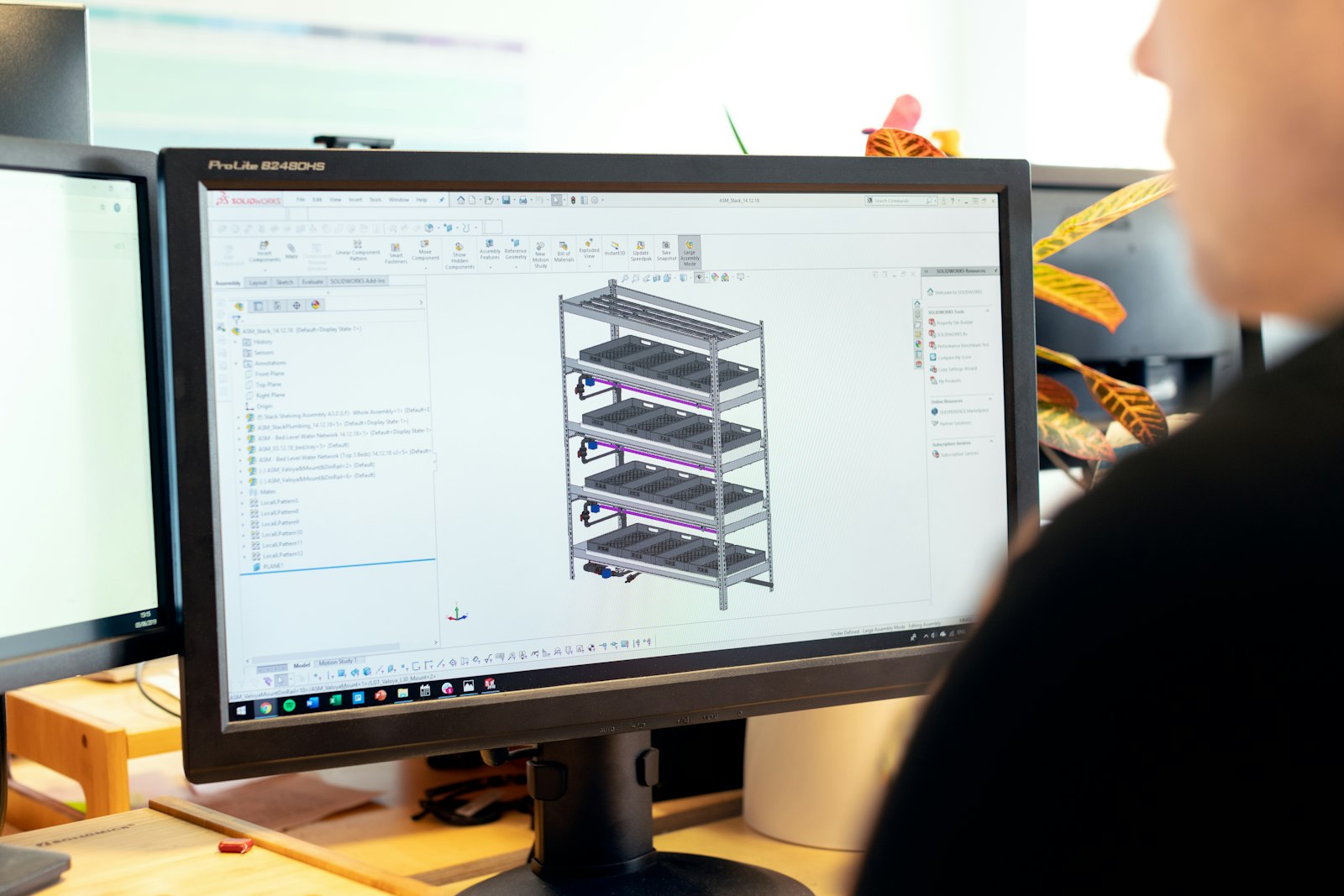
Design engineer working on a computer model at a desk, part of an R&D project

In the fiscal year that ended March 31, 2026, the Canada Revenue Agency processed 23,677 SR&ED claims and allowed $4.6 billion in investment tax credits. Software development accounted for 42.6 per cent of the credits allowed, more than any other field, according to the CRA’s program statistics. If you run a Canadian tech startup, the SR&ED tax credit could return a real share of your engineering payroll.

SR&ED (short for Scientific Research and Experimental Development) is the largest single source of federal R&D support for Canadian businesses. For a small Canadian-controlled private corporation (CCPC), it can refund up to 35 cents on every eligible dollar spent on R&D, even if the company has no taxable income. And as of March 2026, it got a lot more generous.

Here’s what a founder needs to know: who qualifies, what work counts, how a claim actually comes together, what changed, and the mistakes that most often get claims cut.

This article is general information, not tax advice. Talk to a qualified accountant or SR&ED specialist about your own situation.

What the SR&ED tax credit is, in plain terms

SR&ED gives you two benefits. First, you can deduct qualifying R&D spending against income, with some flexibility on timing. Second, you earn an investment tax credit (ITC) on that spending. The CRA’s program overview describes two rates:

  • The enhanced rate of 35 per cent, which is refundable in cash, for qualifying CCPCs on spending up to an annual expenditure limit.
  • The basic rate of 15 per cent for spending above that limit and for most other corporations. For larger companies it’s generally non-refundable, so it only reduces taxes owed.

The refundable part is what makes SR&ED so valuable to startups. A pre-profit company burning cash on engineering can get a cheque back from the government after filing its return. Provinces add their own credits on top. Ontario’s Innovation Tax Credit, for example, adds a refundable 8 per cent for qualifying corporations.

Who qualifies

Corporations, individuals, trusts and partnerships that carry out SR&ED work in Canada can claim. In practice, the enhanced refundable credit is what startups care about, and it’s aimed at CCPCs. That means a private corporation not controlled by non-residents or public companies.

Two thresholds decide how much of the enhanced credit you get. The first is the annual expenditure limit, now $6 million. The second is a phase-out tied to the prior year’s taxable capital employed in Canada. Under the new rules, the limit starts shrinking once taxable capital passes $15 million and disappears at $75 million.

Here’s a trap for venture-backed founders. If a non-resident investor or a public company ends up controlling your corporation, even indirectly, you can lose CCPC status and with it the refundable 35 per cent rate. Check your cap table and shareholder agreements before you close a large foreign-led round.

What counts as eligible work

This is where most claims succeed or fail. The CRA’s eligibility policy asks five questions, and you need a yes to all of them:

  1. Was there a scientific or technological uncertainty?
  2. Did the work involve forming hypotheses aimed at reducing that uncertainty?
  3. Did the overall approach follow a systematic investigation, testing those hypotheses through experiment or analysis?
  4. Was the work done to achieve a scientific or technological advancement?
  5. Were records kept of the hypotheses tested and the results?

The key word is uncertainty. It doesn’t mean “we weren’t sure customers would like it.” It means your team couldn’t know, using standard practice and publicly available knowledge, whether a technical approach would work or how to make it work.

Close-up of source code on a computer screen
Software accounts for the largest share of SR&ED credits. Photo: Chris Ried / Unsplash

What that looks like for software

Building a standard CRUD app with a well-known framework usually isn’t SR&ED, however hard the team worked. Designing a new indexing approach because existing databases couldn’t meet your latency targets at your data volume might be. Training a machine-learning model where the open question is whether a known architecture works at all on your kind of data can qualify. Tuning hyperparameters on a well-understood problem generally doesn’t.

A useful test is to ask whether a competent developer could look up the answer, or whether your team had to run experiments to find it. Failed experiments count too. A technical dead end is often the best evidence that real uncertainty existed.

Support work and exclusions

Support work like engineering, design, computer programming, data collection and testing can be included if it’s commensurate with the needs of the SR&ED and directly supports it. The law explicitly excludes several categories:

  • market research or sales promotion
  • quality control or routine testing
  • social sciences and humanities research
  • commercial production and style changes
  • routine data collection

How the money is calculated

Qualifying expenditures fall into a few buckets. Salaries of employees directly doing SR&ED are the largest for most tech startups. Payments to arm’s-length contractors count at 80 per cent. Materials consumed or transformed in the work count too.

Most small claimants use the proxy method for overhead. Rather than tracking actual rent, utilities and administrative costs, you add a prescribed proxy amount equal to 55 per cent of the SR&ED salary base. Salaries for “specified employees”, a category that often includes founders with large shareholdings, face extra limits. For the proxy calculation, their salary counts only up to the lesser of 75 per cent of their pay and 2.5 times the year’s maximum pensionable earnings, and bonuses and taxable benefits are left out.

Here’s a simplified example. Say your Toronto startup paid four developers a combined $400,000 for eligible work and spent $50,000 with an arm’s-length contractor:

  • Salaries: $400,000
  • Proxy amount (55 per cent of salaries): $220,000
  • Contractor at 80 per cent: $40,000
  • Total qualified expenditures: $660,000
  • Federal refundable ITC at 35 per cent: $231,000

That’s before any provincial credit. One caveat matters a lot: government assistance reduces your qualified expenditures. If an NRC IRAP grant funded part of those developers’ salaries, the CRA’s assistance rules require you to subtract it, project by project.

How a claim actually works

SR&ED isn’t a grant you apply for in advance. You do the work, then claim it with your corporate tax return. The mechanics:

  1. Track the work as it happens. Keep time records, commit histories, test results, design notes and tickets that show your hypotheses and what you learned.
  2. File Form T661, which describes each project’s technical uncertainty, the work done and the advancement sought, along with the expenditures.
  3. File Schedule 31 (T2SCH31) to calculate the investment tax credit, plus any provincial schedules.
  4. Answer any review. The CRA may send a research and technology advisor and a financial reviewer to examine the claim.

The deadline is strict. Under the filing requirements policy, corporations must file the prescribed forms within 18 months of the end of the tax year in which the spending happened. Miss it and the expenditure can’t be claimed as SR&ED, ever. The CRA has no power to extend it.

Most claims go through. In 2025-26, 90 per cent of reviewed claims were accepted as filed, 6 per cent were accepted with changes and 4 per cent were denied. The CRA processed 92.5 per cent of refundable claims selected for review within its 180-day service standard.

What changed in 2025 and 2026

The program had barely changed in a decade until the 2024 Fall Economic Statement and Budget 2025 rewrote the key numbers. Bill C-15, the Budget 2025 Implementation Act, received Royal Assent on March 26, 2026, EY reported, which turned these proposals into law:

  • Expenditure limit doubled. The ceiling for the 35 per cent refundable credit rose from $3 million to $6 million. A qualifying CCPC can now receive up to $2.1 million a year in refundable federal credits. The increase applies to tax years beginning on or after December 16, 2024.
  • Higher phase-out thresholds. The taxable capital band moved from $10 million-$50 million to $15 million-$75 million, so growing companies keep the enhanced rate longer.
  • Public companies included. Eligible Canadian public corporations can now claim the enhanced 35 per cent refundable credit, subject to the same limits.
  • Capital spending is back. Equipment and machinery used for SR&ED are eligible again for both the deduction and the credits, reversing a 2014 exclusion. This applies to property acquired on or after December 16, 2024.
Person reviewing financial documents with a calculator and laptop
Claims are filed with the corporate tax return. Photo: Kelly Sikkema / Unsplash

The CRA also changed how it runs the program. Since April 1, 2026, you can ask for optional pre-claim approval of up to three projects before you spend the money, with each approval valid for three years. Approved claims get an accelerated 90-day expenditure review instead of the usual 180 days. The agency says it’s also using AI tools to triage low-risk claims faster and plans to review the T661 form.

Quebec went its own way. It replaced several provincial R&D credits with a new one that pays 30 per cent on the first $1 million of eligible spending and 20 per cent above that, for tax years beginning after March 25, 2025.

Common mistakes that cost founders money

  • Reconstructing documentation after the fact. Records written a year later, from memory, are the weakest part of most rejected claims. Write it down while you work. Even a short weekly note per project helps.
  • Claiming product work, not research. New features, UI work and integrations with documented APIs rarely qualify on their own. Describe the technical problem, not the business outcome.
  • Forgetting to reduce for grants. IRAP, provincial grants and some contract payments all reduce qualified expenditures. Leaving them in invites a reassessment.
  • Losing CCPC status without noticing. A foreign-led round or a change in voting control can quietly drop you to the 15 per cent non-refundable rate.
  • Overpaying for help. Many SR&ED consultants work on contingency, often taking a percentage of the refund. Some are excellent. Read the contract, understand who answers a CRA review, and compare fees.
  • Missing the 18-month deadline. It’s absolute. Put it in your calendar on the day your fiscal year ends.

A practical plan for your first claim

If you’ve never claimed, start with your most technically uncertain project from the past year and ask whether it passes the CRA’s five questions. Pull together time records for the people who worked on it. Separate any grant funding. Then decide whether to prepare the claim yourselves, with your accountant, or with a specialist.

For new projects, think about the pre-claim approval route. It costs some up-front effort, but it gives you certainty before you commit engineering budget. With the limit now at $6 million and capital equipment eligible again, SR&ED is worth more to Canadian startups than it has been in years. The founders who benefit most will be the ones who treat it as part of their engineering process, not a scramble at tax time.

Sources and further reading

Leave a comment

Your email address will not be published. Required fields are marked *

Sign Up for Our Newsletter

Get our best reporting on Canadian tech and startups in your inbox twice a week. Free, and you can unsubscribe anytime.

Email Us: [email protected]

Call: +1 (416) 555-0147

Suite 704, 120 Adelaide Street West, Toronto, ON M5H 1T1, Canada

© 2026 Texcovery Media. All rights reserved.