








• Home  
  • Right to Repair: What It Means for Your Phone and Laptop in Canada
- Hardware

Right to Repair: What It Means for Your Phone and Laptop in Canada

Canada lets you break digital locks to fix devices, and Quebec now guarantees three years of repairs. Here’s what right to repair means for your gadgets.

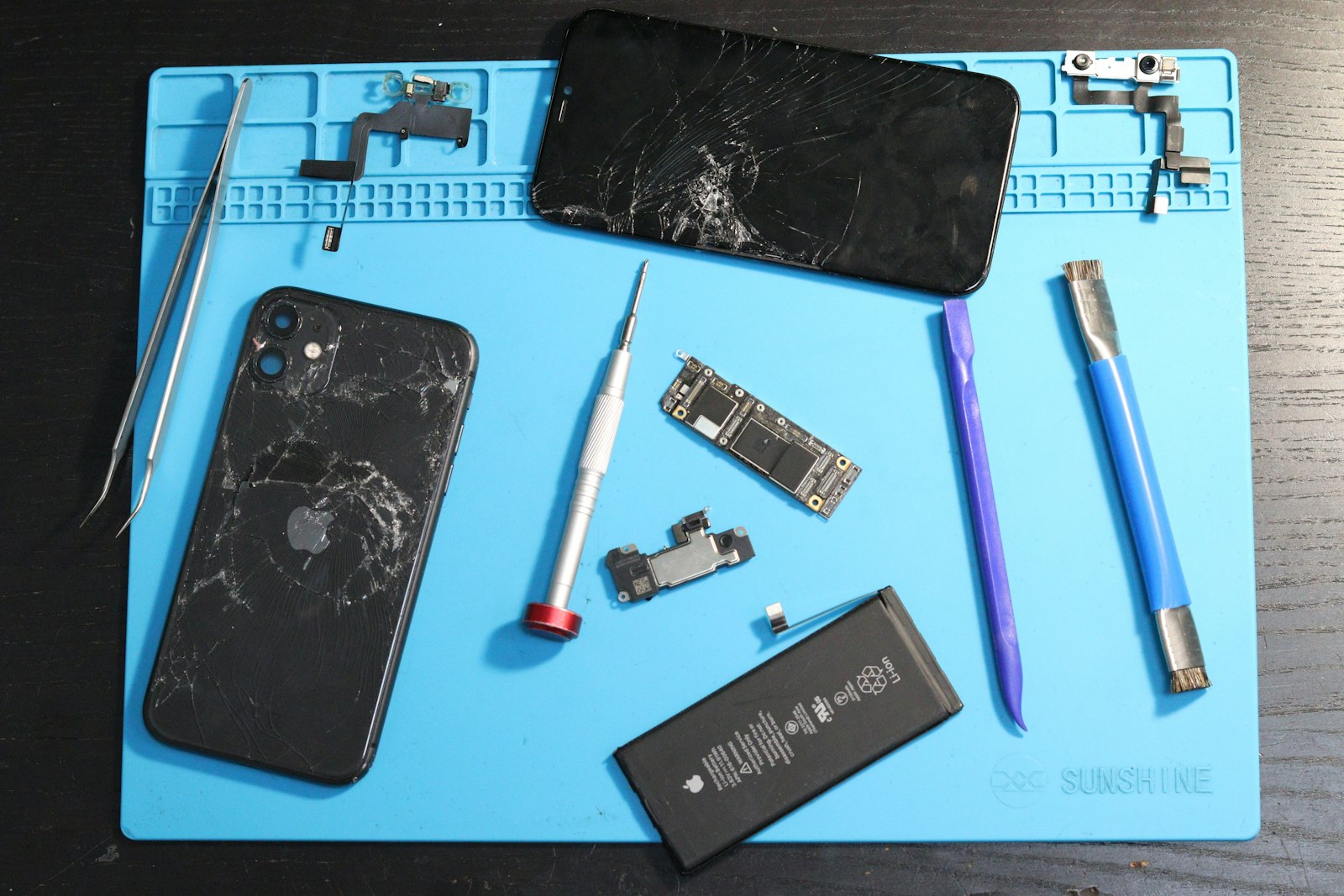
A disassembled iPhone and repair tools laid out on a blue repair mat

As of today, October 5, 2026, if you buy a new smartphone, laptop or tablet in Quebec, the law gives you three years of free repairs if it stops working properly. No extended warranty to buy, no fine print to sign. It’s the most concrete win yet for the right to repair, a movement that has spent a decade arguing that if you own something, you should be allowed to fix it.

It used to be a niche cause championed by farmers locked out of their tractors and tinkerers with soldering irons. Now it’s written into law in Ottawa, Quebec City, Brussels and a growing list of US states. Apple sells repair kits. Samsung publishes manuals. iFixit’s teardown scores influence product reviews.

But the rules are a patchwork, and what you can actually do with a cracked screen or a dying battery depends heavily on where you live. Here’s what right to repair means for your phone and laptop in late 2026.

What “right to repair” actually covers

The phrase gets used loosely, so it helps to break it into the pieces that laws actually address:

  • Access to parts at a reasonable price, for a reasonable number of years after a product stops being sold.
  • Access to information: repair manuals, schematics and diagnostic software.
  • Freedom to fix: permission to bypass digital locks that stop you or an independent shop from diagnosing or repairing a device.
  • Design rules: requirements that batteries be replaceable or that devices be built to be opened without destroying them.
  • No “parts pairing” tricks: limits on software that rejects or degrades a genuine replacement part because it wasn’t installed by the manufacturer.

Different jurisdictions tackle different pieces. That’s why a law in one place can sound sweeping while changing little in practice.

Canada’s federal laws: C-244 and C-294

On November 7, 2024, two private members’ bills amending the Copyright Act received royal assent on the same day. Supporters described Canada as the first country with a national right-to-repair law, which is true but needs context.

Bill C-244, sponsored by Liberal MP Wilson Miao, lets you circumvent a technological protection measure (a “digital lock”) when the purpose is solely to diagnose, maintain or repair a product. That covers you and an independent repair shop working on your behalf. Before this, breaking a software lock to fix your own phone could technically violate copyright law even if you never copied anything.

Bill C-294 does the same for interoperability. You can bypass a digital lock to make a program work with a device or component, such as getting third-party software or parts to talk to equipment you own.

Here’s the catch. Both bills only remove a legal barrier. They don’t force any manufacturer to sell you parts, publish manuals or release diagnostic tools. And to stay consistent with Canada’s trade obligations under CUSMA, the final version of C-244 dropped a provision that would have allowed trade in circumvention tools, as the parliamentary debate record shows. You’re allowed to pick the lock; selling lock picks is another matter. During debate, even supporters called it only one element of a real right to repair.

Quebec’s Bill 29: the strongest rules in North America

If Ottawa’s laws are about permission, Quebec’s are about obligation. Bill 29, the Act to protect consumers from planned obsolescence and to promote the durability, repairability and maintenance of goods, passed the National Assembly unanimously and became law on October 5, 2023. It amends the province’s Consumer Protection Act and has been phased in over three years.

What’s already in force

Selling goods with planned obsolescence, meaning products deliberately designed to fail early, has been prohibited since 2023. A “guarantee of availability” for replacement parts, repair services and repair information followed, with manufacturers expected to tell buyers whether they guarantee parts and repairs. Samsung’s Canadian self-repair page, for example, flags those Quebec disclosure requirements taking effect on October 5, 2025, and states plainly that Samsung Canada does not guarantee part availability. The law also bars techniques that obstruct repairs unless needed for safety or regulatory reasons.

What starts today

The headline measure, a legal warranty of good working order, applies to new goods bought or leased from a merchant starting October 5, 2026, according to Quebec’s Office de la protection du consommateur. Coverage periods are fixed by product type:

Product Warranty of good working order
Smartphones, computers, tablets, game consoles 3 years
Televisions 4 years
Washers, dryers, dishwashers 5 years
Refrigerators, freezers, stoves, air conditioners, heat pumps 6 years

The warranty is automatic and free, covers parts and labour, and runs from the delivery date. It sits on top of the existing warranty of reasonable durability, which still applies before, during and after. In practical terms, a Quebec buyer of a $1,500 laptop now has three years of protection without paying for an add-on plan. If you live elsewhere in Canada, you don’t get this. That gap is worth noticing next time a retailer offers you an extended warranty.

iPhone components, including the screen and internal parts, disassembled and arranged on a blue mat
Phone parts laid out mid-repair. Photo: Fotografia Lui Vlad / Unsplash

The US patchwork: ten states and counting

The United States has no federal right-to-repair law for consumer electronics, so states have filled the gap. According to U.S. PIRG, Texas became the ninth state with electronics repair protections when its HB 2963 took effect on September 1, 2026, joining California, Colorado, Connecticut, Kansas, Minnesota, New York, Oregon and Washington. The Repair Association counts ten states with right-to-repair laws of some kind.

The laws vary a lot:

  • New York went first with its Digital Fair Repair Act, in effect since 2023. In June 2026, the legislature also passed the first US bill requiring repairability scores at the point of sale; at last report it was awaiting the governor’s signature.
  • Minnesota and California took effect on July 1, 2024. California’s requires manufacturers to provide parts, tools and documentation for personal electronics and appliances.
  • Oregon is widely seen as the strongest because it restricts parts pairing, so a manufacturer can’t use software to block or downgrade a working replacement part.
  • Colorado broadened its rules to most digital electronics starting January 1, 2026.
  • Texas covers phones, laptops, tablets, cameras and speakers, but excludes game consoles and home appliances.

Repair rules have also gained ground beyond phones. In July 2026, the US Federal Trade Commission settled its lawsuit against John Deere over farm equipment repair restrictions, which advocates hailed as a major win.

Europe sets the pace

The European Union is the world’s most aggressive regulator on repair, and because big manufacturers often build to EU standards, its rules spill into products sold in Canada.

  • Ecodesign rules for phones and tablets, in force since June 20, 2025, require critical spare parts to be available to professional repairers for seven years after a model leaves the market, operating system updates for at least five years, and batteries that keep 80% of capacity after 800 cycles. Devices also carry an A-to-E repairability class on their energy label, per the European Commission.
  • The Right to Repair Directive applies from July 31, 2026. Manufacturers must offer repairs at a reasonable price and time, provide parts and manuals, and can’t refuse service because a device was previously fixed by someone else or uses non-original parts.
  • The Batteries Regulation will require user-replaceable batteries in many portable devices from 2027.

Enforcement is uneven. A September 2026 iFixit review of 2,334 smartphone records in the EU product database found only 18% properly linked to spare part prices or repair instructions, and some manufacturers had given themselves top repairability grades without publishing repair information at all. Still, the rules are changing hardware. Nintendo is rolling out EU-only Switch 2 versions with replaceable batteries, and Amazon’s Kindle firmware points the same way.

Apple, Samsung and the self-repair programs

Under pressure from these laws, manufacturers launched their own repair programs. Apple’s Self Service Repair, announced in 2021, now covers iPhone, iPad, Mac, displays and Beats products. You look up the manual, buy or rent genuine parts and tools through a third-party-run store, do the repair, and then run Apple’s Repair Assistant or System Configuration software to finish it. That last step is where critics focus: software calibration gives Apple a say in whether a repair is fully recognized.

Samsung’s Canadian program offers genuine parts and manuals for selected Galaxy phones and tablets, plus some TVs and appliances, through its certified parts portal, while noting that availability isn’t guaranteed.

The programs help. They also leave gaps. iFixit noted in early 2026 that Apple offers no repair manuals at all for AirPods, only a paid battery service.

An opened laptop showing its motherboard, battery and cooling system during disassembly
A laptop opened for repair, with the battery and motherboard exposed. Photo: Andrey Matveev / Unsplash

Repairability scores: what to look for before you buy

iFixit scores devices from 0 to 10 based on how easy it is to open them, whether common repairs like screens and batteries are prioritized, whether standard screws or glue hold things together, and whether the maker supplies parts and instructions. Recent results show a wide spread. The Fairphone 6 earned a perfect 10. Samsung’s Galaxy S25 Ultra and S25 Edge scored 5, held back by tightly glued screens, and the Galaxy Z Fold 7 managed only 3. Apple’s new iPhone 18 Pro and Pro Max got a provisional 7 in September 2026 thanks to a screwed-in battery tray, though iFixit warned that most repairs require removing the display and its plastic frame cracked on three of four teardown units.

Before your next purchase, a practical checklist:

  1. Check the score. Look up the iFixit teardown, or the EU repairability class if the model sells there.
  2. Check parts availability in Canada. Visit the manufacturer’s Canadian parts or self-repair page before you buy, not after something breaks.
  3. Know your provincial rights. In Quebec, the three-year warranty of good working order covers new devices bought from today, so skip the extended warranty upsell. Elsewhere, read the manufacturer’s warranty and your province’s consumer protection rules.
  4. Use independent shops without fear. Under C-244, an independent repairer can legally bypass digital locks to fix your device.
  5. Replace batteries, not phones. A new battery is usually the cheapest way to add years to a phone or laptop, and newer designs are making that easier.

None of this is legal advice, and the rules keep shifting. But the direction is clear. In Canada, you now have the legal right to fix what you own, and in Quebec, a legal right to expect it to last. The rest of the country, and the rest of the industry, is being pulled the same way.

Sources and further reading

Leave a comment

Your email address will not be published. Required fields are marked *

Sign Up for Our Newsletter

Get our best reporting on Canadian tech and startups in your inbox twice a week. Free, and you can unsubscribe anytime.

Email Us: [email protected]

Call: +1 (416) 555-0147

Suite 704, 120 Adelaide Street West, Toronto, ON M5H 1T1, Canada

© 2026 Texcovery Media. All rights reserved.