






• Home  
  • Carbon Capture and Climate Tech Startups: What’s Actually Working
- Green Tech

Carbon Capture and Climate Tech Startups: What’s Actually Working

CarbonCure, Svante, Deep Sky and Stratos show what carbon capture can and can’t do yet. Here’s the real cost per tonne and Canada’s tax credit.

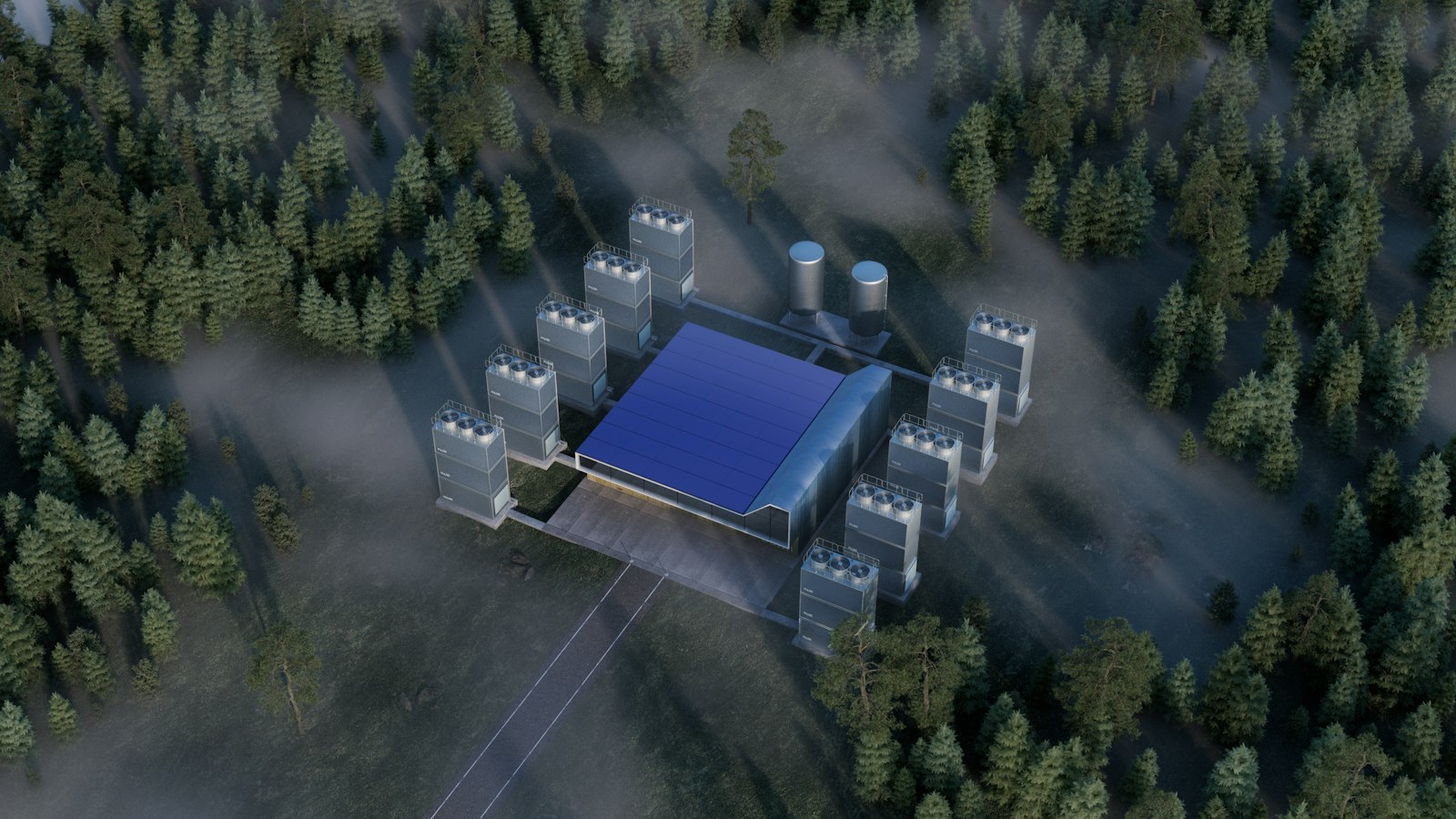
Aerial view of a direct air capture facility site surrounded by forest in Alberta

In June 2026, a small plant outside Innisfail, Alberta, did something no facility in North America had done before. Deep Sky’s Alpha site delivered what were reported as the first certified direct air capture credits in North America, issued by the certifier Isometric. For carbon capture in Canada, it was a first. The carbon dioxide the plant pulled from the prairie air is now locked underground, and Microsoft and RBC have the paperwork to prove it.

That’s a real milestone. It’s also a tiny one. Cumulative deliveries of durable carbon removal worldwide only passed one million tonnes in 2025, while the world emits tens of billions of tonnes of CO2 a year. The gap between the promise of carbon capture and what’s actually in the ground is the most important thing to understand about this sector, and Canada sits right in the middle of it.

Canadian companies invented some of the leading carbon capture technologies, Ottawa offers some of the richest tax credits in the world, and the country has the geology to store carbon at enormous scale. So what’s working, what isn’t, and what does it cost? Here’s a clear-eyed look at the climate tech startups doing carbon capture.

Carbon capture versus carbon removal: a quick primer

The terms get blurred, so it’s worth separating them:

  • Point-source capture grabs CO2 from a smokestack, such as a cement kiln, pulp mill or gas plant, before it reaches the atmosphere. It reduces new emissions.
  • Direct air capture (DAC) pulls CO2 out of ordinary air, where it’s far more dilute. That makes it harder and more expensive, but it actually removes carbon already emitted.
  • Bioenergy with carbon capture and storage (BECCS) captures CO2 from burning biomass. Because the plants absorbed that carbon while growing, storing it can count as removal.
  • Utilization puts captured CO2 to use. The most permanent form is mineralizing it into concrete.

Where the CO2 ends up matters as much as how it’s caught. Storage in deep saline rock formations or concrete is considered durable. Pumping it into oil wells to squeeze out more crude, known as enhanced oil recovery, is the controversial path, because the oil produced adds new emissions.

CarbonCure: the quiet success story

If you’re looking for the Canadian carbon tech company with the most real-world deployment, it’s CarbonCure. The Canadian company retrofits concrete plants to inject captured CO2 into fresh concrete, where it instantly mineralizes into a solid and stays put. Producers can also use slightly less cement, which is where most of concrete’s carbon footprint comes from.

By November 2025, CarbonCure’s partners had produced more than 10 million truckloads of concrete with its technology, storing over 690,000 tonnes of CO2, according to Carbon Herald. Its systems run at plants in more than two dozen countries. The company named Yuliya Kravtsov as CEO in April 2026.

Why does it work when others struggle? The business case doesn’t depend on a carbon price alone. Concrete producers save on cement, customers want lower-carbon building materials, and the equipment bolts onto plants that already exist. The per-truck carbon savings are modest. The scale is not.

A green and white concrete mixer truck at a construction site
Concrete is one of the few places captured CO2 is stored at scale today. Photo: CHUTTERSNAP / Unsplash

Svante: building the filters, then the projects

Vancouver-area Svante makes solid sorbent filters, built from nanoengineered materials called metal-organic frameworks, that trap CO2 from industrial exhaust or ambient air. In May 2025 it opened what it calls the first gigafactory for carbon capture filters, a 141,000-square-foot plant in Burnaby, B.C., with enough output to capture up to 10 million tonnes of CO2 a year. Backers include Chevron, Samsung, United Airlines Ventures and the Canada Growth Fund.

The company has since moved downstream into developing projects itself. In March 2026 it acquired Carbon Alpha, a Canadian BECCS developer behind the North Star project at the Meadow Lake Tribal Council’s bioenergy centre in Saskatchewan. Phase one is designed to capture up to 140,000 tonnes of CO2 a year. A month later, Microsoft agreed to buy 626,000 tonnes of carbon removal credits from the project over 15 years, with operations targeted around 2029. A final investment decision is expected in early 2027.

Here’s the catch: a signed offtake and a feasibility study are not a running plant. North Star is promising, especially as an Indigenous-led partnership, but it’s still a few years and several hundred million dollars from proving itself.

Carbon Engineering and Stratos: the biggest bet yet

Carbon Engineering, founded in 2009 by climate scientist David Keith and based in Squamish, B.C., was one of the first serious direct air capture companies. A pilot plant there started capturing about a tonne of CO2 a day in 2015. In 2018 Keith and colleagues published a widely cited paper in Joule estimating that a large plant could capture CO2 for roughly US$94 to US$233 a tonne.

In August 2023, Occidental Petroleum agreed to buy Carbon Engineering for about US$1.1 billion, paid over three years. Squamish remains its research hub. The technology’s first commercial test is Stratos, a plant in Ector County, Texas, built by Occidental’s subsidiary 1PointFive and designed to capture up to 500,000 tonnes a year once fully running. Microsoft signed on to buy 500,000 tonnes of removal credits in 2024, and the project secured federal permits for its CO2 storage wells in April 2025.

Stratos has had a bumpy road. Occidental originally targeted mid-2025 commercial operation. In May 2026 the company said it had found a problem with “non-process components” unrelated to the capture technology, which it said was performing as expected in testing, and that it was still assessing the repair timeline. Project costs had climbed by US$100 million to about US$1.2 billion, Carbon Herald reported. Whether Stratos hits its design capacity, and at what cost per tonne, will be the single most important data point for direct air capture this decade.

Deep Sky and Climeworks: proving DAC in the field

Deep Sky

Canadian startup Deep Sky took a different approach. Rather than betting on one technology, its Alpha site in Alberta, operating since August 2025, tests units from multiple DAC developers side by side. It’s essentially a proving ground. In June 2026 it delivered the first certified North American DAC credits, issued through the certifier Isometric, to Microsoft and RBC under a purchase agreement running to 2034.

The next step is much bigger. Deep Sky is planning a facility in southwestern Manitoba designed to remove up to 500,000 tonnes a year, with an estimated investment of about $500 million and construction targeted for 2026. It has also secured a $40 million grant from Breakthrough Energy Catalyst.

Climeworks

Switzerland’s Climeworks is the best-known name in DAC, and its record shows how hard this is. Its Orca plant in Iceland, opened in 2021, has a nominal capacity of 4,000 tonnes a year. Mammoth, opened in May 2024, is rated at 36,000 tonnes. In 2025, an investigation by Icelandic outlet Heimildin reported that the company’s machines had been capturing only a fraction of their rated capacity. Climeworks cut staff in May 2025, citing policy uncertainty and the pending status of its U.S. project.

The company has been candid about costs. It has set a target of US$250 to US$350 per tonne captured, or US$400 to US$600 per tonne of net removal, by 2030 with its third-generation technology. In September 2026 it said sorbent and design upgrades had more than doubled capture performance in upgraded units at Mammoth and cut operating costs by more than half. Canadian buyers are paying attention: TD Bank signed a 10-year portfolio deal with Climeworks in June 2026.

What does a tonne actually cost?

Cost per tonne is the number that decides whether carbon removal scales. Here’s roughly where things stand, based on company targets and published research:

Approach Cost picture
CO2 mineralized in concrete Low; often offset by cement savings
Point-source capture at industrial sites Varies widely by CO2 concentration
Direct air capture, 2018 estimate (Keith et al.) US$94 to US$233 per tonne at scale
Climeworks 2030 target, net removal US$400 to US$600 per tonne

The honest read is that DAC is still far more expensive than the 2018 estimates suggested. Real plants face energy costs, downtime, sorbent wear and the cost of verifying every tonne. That’s why buyers today are mostly large tech companies and banks with net-zero pledges, paying premium prices to help the industry reach scale.

Industrial smokestacks releasing emissions against a blue sky
Point-source capture targets emissions like these. Photo: Peter Mammitzsch / Unsplash

Canada’s CCUS tax credit, and the case against it

Ottawa’s main lever is the carbon capture, utilization and storage investment tax credit, a refundable credit on eligible project costs. According to the Canada Revenue Agency, the rates for expenses from 2022 through 2035 are:

  • 60% for equipment that captures CO2 directly from the air
  • 50% for other carbon capture equipment
  • 37.5% for transportation, storage or use

Those rates are cut in half for 2036 through 2040. Only two uses qualify: storage in dedicated geological formations, and use in concrete production. Enhanced oil recovery is explicitly excluded.

Critics argue the credit mostly subsidizes the oil sands. The Pathways Alliance, a group of the largest oil sands producers, has scaled its flagship CCS network back to about six million tonnes a year by the mid-2030s, down from an original goal of 22 million by 2030. Producers now target a final investment decision in late 2027 or early 2028, and Prime Minister Mark Carney has tied federal support for new pipeline capacity to progress on the project.

The track record of Canada’s existing big projects fuels the skepticism. Analysts at the Institute for Energy Economics and Financial Analysis found SaskPower’s Boundary Dam has averaged about a 57% capture rate against a 90% design goal. A 2022 Global Witness analysis found Shell’s Quest project in Alberta captured about 48% of the total emissions linked to its hydrogen plant from 2015 to 2019. Both have stored millions of tonnes. Neither has met the headline promise.

What to watch, and what it means for you

If you’re a founder, investor or simply someone trying to judge whether carbon capture is real, here’s what to keep an eye on:

  1. Delivered tonnes, not announced tonnes. Purchase agreements far exceed deliveries. Verified, stored tonnes are the only metric that counts.
  2. Stratos’s ramp-up. The first plant at this scale will set expectations for everyone else, including Deep Sky’s Manitoba project.
  3. Cost curves. Watch whether Climeworks, Svante and Deep Sky’s technology partners publish real operating costs, not just targets.
  4. Policy durability. The U.S. Department of Energy cancelled billions in climate awards in 2025, though its two flagship DAC hubs survived. Canada’s credit runs to 2040, but political winds shift.
  5. The boring wins. Concrete mineralization, pulp mill retrofits and other unglamorous applications may outpace headline-grabbing DAC plants for years.

Carbon capture is neither a scam nor a silver bullet. It’s a set of expensive tools that make sense for emissions that are genuinely hard to cut, like cement, and for cleaning up carbon already in the air. Canada has the companies, the geology and the subsidies to lead. What it still needs is a few big plants that do what they promised.

Sources and further reading

Leave a comment

Your email address will not be published. Required fields are marked *

Sign Up for Our Newsletter

Get our best reporting on Canadian tech and startups in your inbox twice a week. Free, and you can unsubscribe anytime.

Email Us: [email protected]

Call: +1 (416) 555-0147

Suite 704, 120 Adelaide Street West, Toronto, ON M5H 1T1, Canada

© 2026 Texcovery Media. All rights reserved.