




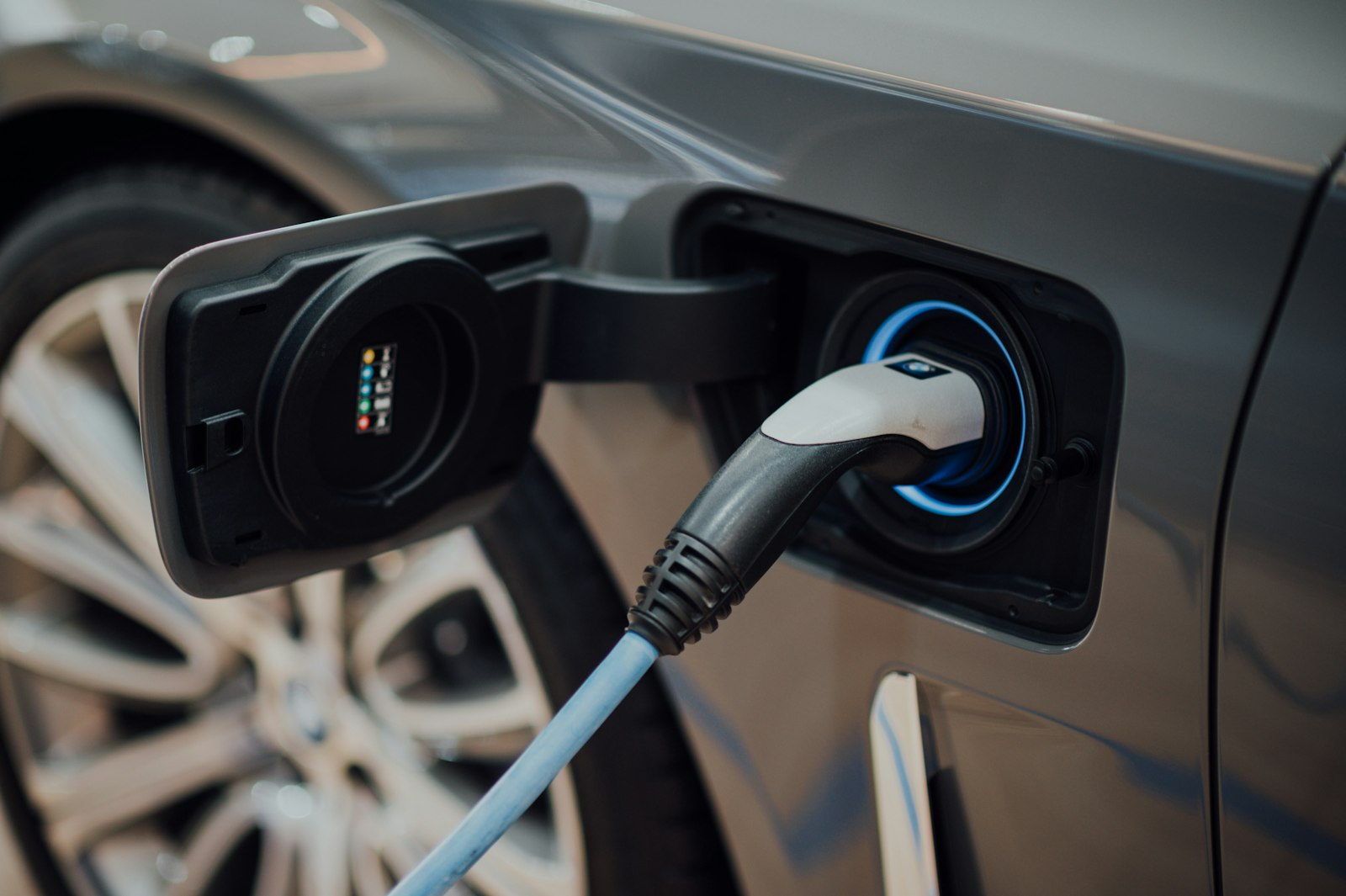
In 2025, a modified Mercedes-Benz EQS drove more than 1,200 kilometres on a single charge, farther than Toronto to Quebec City, using battery cells from a Massachusetts startup called Factorial. By June 2026, that startup was trading on Nasdaq. Around the same time, Honda signed a deal with QuantumScape, and BYD said its first car with solid-state batteries would arrive in 2027.
Solid-state batteries have been “five years away” for about fifteen years, so a bit of skepticism is healthy. But 2026 feels different in one specific way: real cells are leaving pilot lines and going into test vehicles from multiple carmakers at once. The question is no longer whether the chemistry works. It’s whether anyone can make it cheaply, at scale, and fast enough to matter.
Here’s what the technology actually is, who is closest, what still stands in the way, and why Canada’s own battery ambitions look very different than they did two years ago.
What makes a battery “solid-state”
Every lithium-ion battery has the same basic parts: a positive electrode (cathode), a negative electrode (anode), a separator, and an electrolyte that lets lithium ions shuttle between the two sides. In today’s batteries, that electrolyte is a flammable liquid.
A solid-state battery swaps the liquid for a solid material that still conducts ions. There are a few main families, each with trade-offs:
- Sulfides conduct ions very well, close to liquids, but can react with moisture and degrade at high voltage. Toyota and many Japanese and Korean players favour them.
- Oxides, including ceramics, are more stable but more brittle and less conductive. QuantumScape uses a ceramic separator.
- Polymers are flexible and easier to process but typically need warmth to conduct well.
- Chlorides are a newer option that researchers say combine good conductivity with easier forming.
The big prize is the anode. A solid electrolyte may allow a lithium-metal anode, or even an “anode-free” design where lithium plates itself during charging. That’s where most of the energy density gain comes from. Cells above 350 Wh/kg become possible, compared with under 300 Wh/kg for most lithium-ion cells today.
The promise, and the fine print
Advocates point to three advantages: more range for the same weight, faster charging, and better safety because there’s no flammable liquid to feed a fire. All three are real in principle. In practice, every claim comes with a footnote.
Lithium metal tends to grow needle-like filaments called dendrites, which can pierce the electrolyte and short the cell. Solid electrolytes resist this better than liquids, but not perfectly. Ceramic electrolytes can also lose contact with the electrodes as the cell swells and shrinks, so many designs need to be squeezed under constant pressure, which adds weight and complexity to a battery pack. And the interface between a solid cathode and a solid electrolyte tends to have high resistance, which hurts power and charging speed.
That’s why the honest summary, as one widely cited overview puts it, is that as of early 2026 most companies in the space still have not commercialized their products.
Who is actually close to solid-state batteries
Factorial Energy
Factorial is the current momentum leader in North America. Stellantis has validated its 77 Ah cells at 375 Wh/kg over more than 600 cycles, with 10-to-90% charging in 18 minutes. The Mercedes EQS road test covered over 1,200 km, with about 25% more usable energy than the stock pack. Factorial went public on June 8, 2026 by merging with a SPAC, at a valuation of about US$1.3 billion, according to Electrek. Its CEO says the cells could be in EVs as soon as 2027. The company has since signed a memorandum of understanding with SK On and a manufacturing partnership with Mitsui Kinzoku, and it says its process is largely compatible with existing lithium-ion lines, which is exactly what investors want to hear.
QuantumScape
QuantumScape, Volkswagen’s long-time partner, missed its own early targets but has kept grinding. Its Eagle pilot line in San Jose went live in 2026 using a faster separator process called Cobra. Its QSE-5 sample cells are rated at 844 Wh/L and can charge from 10% to 80% in about 12 minutes. In September 2025, VW showed a Ducati V21L motorcycle running on the cells, and in June 2026 Honda signed a multi-year joint development agreement after benchmarking it against rivals. VW’s battery arm PowerCo had earlier agreed to license the technology for up to 40 GWh a year. The bull case: two major automakers now back it. The bear case: licensing deals and pilot lines are not mass production.
Toyota
Toyota has filed thousands of solid-state patents and has repeatedly said it will commercialize the technology between 2027 and 2028. The supply chain is being built around it: Idemitsu Kosan is constructing a pilot plant for sulfide solid electrolytes in Chiba that should supply material from 2027, and Sumitomo Metal Mining has developed a production-ready cathode material, as electrive reported. Toyota talks about 1,200 km of range initially. Expect the first models to be low-volume and expensive.
Samsung SDI
Samsung SDI has run a solid-state pilot line in Suwon, South Korea, since 2023 and says it will start mass production in 2027. In October 2025 it teamed up with BMW and Colorado-based Solid Power, which supplies the sulfide electrolyte, to put production-grade cells into BMW test vehicles.
China’s fast followers
Chinese firms are moving quickly and hedging with “semi-solid” cells that keep some liquid. BYD’s battery arm plans limited batches of sulfide all-solid-state cells in 2027 and mass production around 2030, with premium brands first. CATL, Geely and Changan have also pointed to 2027. Nio and WeLion already ship semi-solid packs in small numbers.
Why manufacturing is the real hurdle
Making a few hundred good cells in a lab is one thing. Making millions a year at a cost that competes with today’s cheapest lithium-ion chemistries is another. The obstacles are concrete:
- Materials. Sulfide electrolytes depend on lithium sulfide, a raw material whose supply chain is only now being built; Idemitsu’s dedicated plant isn’t due until 2027. Sulfides are also sensitive to degradation, which complicates handling.
- Thin, defect-free layers. Ceramic separators have to be extremely thin and uniform. A single flaw can kill a cell.
- Pressure and packaging. If cells need external compression, pack design gets heavier, eating into the energy density advantage.
- Yield. Early lines scrap a lot of product. Costs only fall once the share of good cells climbs very high.
- Capital. Even with “drop-in” claims, new equipment, dry rooms and quality systems cost billions to scale.
So when a company says it will “launch” solid-state cells in 2027, read it as a small number of premium vehicles. Broad commercialization, by most industry estimates, looks more like 2029 to 2030.
What it means for EVs and for your phone
For electric vehicles, the first impact will be at the top of the market: luxury sedans and performance models where buyers will pay for range and fast charging. If Factorial’s and Toyota’s numbers hold up in production, 1,000-km EVs stop being a stunt. That would matter a great deal in a country the size of Canada, where long highway gaps between chargers and cold winters shave range. Over time, solid-state could also let carmakers use smaller packs for the same range, cutting weight and raw materials.
For phones and laptops, don’t hold your breath. Consumer electronics need small, cheap, thin cells made by the hundreds of millions, and the automotive-scale programs above aren’t aimed at that market. Even Xiaomi’s 2025 solid-state patent was aimed at its cars, not its phones. Small semi-solid cells are already showing up in niches like e-bikes, but a solid-state iPhone isn’t on any credible public roadmap.
Canada’s battery supply chain: a reality check
Two years ago, Canada was pitching itself as a top-tier battery nation, with billions in subsidies for three big cell plants. The picture in late 2026 is more mixed.
Northvolt in Quebec: cancelled
Northvolt’s planned gigafactory near Montreal was supposed to start at 30 GWh and grow to 60 GWh. Then the Swedish parent collapsed, filing for Chapter 11 in the US in November 2024 and bankruptcy in Sweden in March 2025. In September 2025, Quebec ended its support. The province wrote off $270 million in equity and still had $240 million tied up in a loan for land, and it is pursuing legal routes to recover money and reclaim the site, per electrive. Lyten, the US company that bought most of Northvolt’s European assets, did not take over the Quebec project.
NextStar in Windsor: open, but pivoting
NextStar Energy, the LG Energy Solution and Stellantis venture, started production in November 2025 and held its grand opening in March 2026, calling it Canada’s first commercial-scale battery manufacturing plant. More than $5 billion has been invested, with 1,300 workers and a target of 2,500. But the plant now also makes cells for grid-scale energy storage, and in February 2026 LG announced it would buy out Stellantis’s 49% stake to shift capacity flexibly between EV and storage customers. Data centres, not just cars, are now part of the business case.
PowerCo in St. Thomas: delayed
Volkswagen’s PowerCo plant in St. Thomas, Ontario, designed for up to 90 GWh a year, began foundation work on its first buildings in October 2025. In September 2026, PowerCo pushed the start of cell production from 2027 to 2029, citing shifting demand and the integration of next-generation technology, according to electrive. Construction continues with EllisDon as general contractor. Given PowerCo’s licensing deal with QuantumScape, it’s worth watching whether St. Thomas ends up making a newer chemistry than first planned.
Upstream, the story is similar. GM and Posco paused the second phase of their cathode plant in Bécancour, Quebec, citing weak EV demand, while Ford, BASF and Umicore have paused or stopped Canadian materials projects. The resource base is still there; Rio Tinto took a majority stake in Quebec’s Nemaska Lithium in early 2026.
How to read solid-state battery news from here
A few rules of thumb will help you separate progress from press release:
- Look for cell-level specs from a third party. Stellantis validating Factorial’s numbers means more than Factorial announcing them.
- Distinguish “semi-solid” from “all-solid-state.” Semi-solid cells are real and shipping, but they’re an incremental step.
- Watch yields and capacity, not just energy density. GWh of production capacity is the number that turns a lab result into a car you can buy.
- Don’t delay an EV purchase for it. If you need a car in the next three years, today’s lithium-ion packs are good and getting cheaper. Solid-state will debut in expensive models first.
- For Canada, follow the chemistry decisions at St. Thomas and Windsor. Whether those plants adopt next-generation cells will decide if Canada is in the solid-state era or only watching it.
The hype was early, not wrong. Solid-state batteries are finally crossing from the lab into real vehicles. What remains is the least glamorous and most decisive part: building factories that can make them by the millions.
Sources and further reading
- Electrek: Solid-state EV battery maker Factorial joins Nasdaq after 745-mile range test
- Electrek: Honda and QuantumScape team up on solid-state batteries
- Electrek: BYD says it leads the solid-state race, first EV in 2027
- electrive: Toyota partner Idemitsu builds pilot plant for solid electrolytes
- electrive: Samsung SDI, Solid Power and BMW collaborate on solid-state batteries
- electrive: Québec pulls out of Canadian Northvolt factory
- electrive: PowerCo postpones battery cell production in Canada
- LG Energy Solution to acquire full ownership of NextStar Energy
- NextStar Energy celebrates grand opening in Windsor
- Solid-state battery: chemistry and industry overview